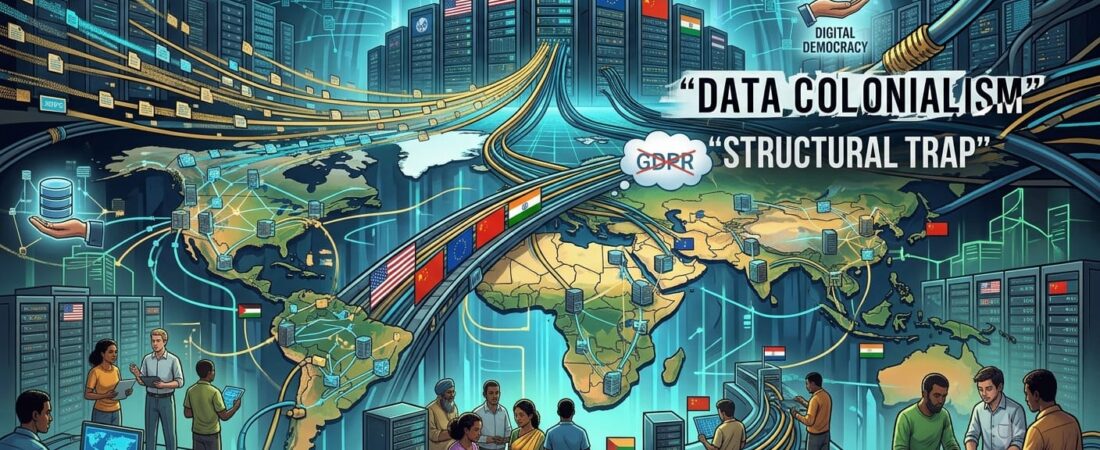
It is a common misconception that developing nations do not think about digital sovereignty. In reality, the Global South is acutely aware of its digital vulnerability—but it is caught in a geopolitical and infrastructural trap that makes true sovereignty exceptionally difficult to execute.
The Trap of Data Colonialism
The core issue is not a lack of intent, but the harsh reality of “data colonialism”. The modern digital order closely mirrors historical extractive economies: the developing world supplies raw material (data) and labor, while the imperial core—largely the US and China—monopolizes the intellectual property, infrastructure, and capital. For example, the vast majority of Africa’s internet traffic travels through submarine cables owned by Western tech conglomerates. When cloud computing, chip manufacturing, and operating systems are controlled abroad, developing nations are forced into a permanent state of asymmetrical dependency.
Legal Sovereignty Without Physical Infrastructure
Socio-legally, many developing countries have attempted to assert control. Nations from Brazil to India have enacted sweeping data protection frameworks. However, legal sovereignty without physical infrastructure is merely a paper claim. A state cannot truly govern data that is stored on foreign shores, processed by foreign algorithms, and subjected to foreign jurisdictions. Because global tech giants hold monopolistic power, they often dictate the terms of engagement, rendering domestic governance laws incredibly difficult to enforce.
Breaking the Cycle
For the Global South, digital sovereignty is not a regulatory luxury; it is a prerequisite for national security and agency in a contested world order. Breaking this cycle requires moving beyond simply copying Western legal frameworks like the GDPR. Developing nations must pool resources, invest heavily in indigenous digital public infrastructure (DPI), and negotiate technology transfers. Until the infrastructural deficit is addressed, their digital sovereignty will remain constrained by global tech hegemony.
Great 👍
WOW! Such a wonderful piece.